IPL Captaincy Impact Analysis 2026 | How Leadership Decisions Change Match Outcomes
Posted on March 9, 2026 by admin
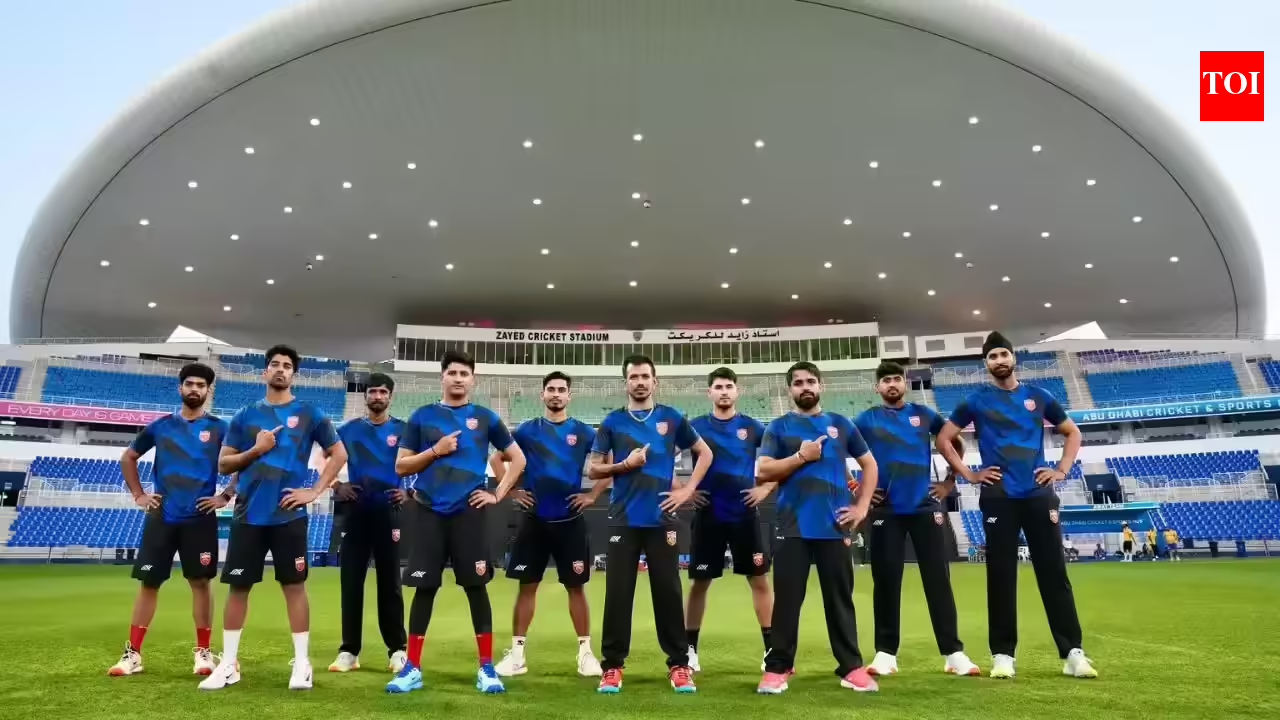
IPL Captaincy Impact Analysis 2026
How Leadership Decisions Change Match Outcomes
In the Indian Premier League (IPL), talent wins moments — but leadership wins matches.
While star batters and bowlers dominate headlines, the captain’s decisions often determine the direction of the game. From toss calls to bowling rotations, field placements to pressure handling, captaincy plays a crucial role in T20 cricket.
In IPL 2026, where margins are razor-thin and matches often go down to the final over, captaincy impact becomes even more significant.
This detailed analysis explains how leadership decisions influence match outcomes and how you can evaluate captaincy strategically when analyzing IPL games.
Why Captaincy Matters More in T20 Cricket
T20 is the shortest format in professional cricket. Each decision has amplified consequences.
A captain controls:
• Toss decision
• Batting order adjustments
• Bowling changes
• Field placements
• Match tempo
• Review calls (DRS)
Unlike longer formats, there is little time to recover from mistakes in T20.
One poor decision can swing momentum permanently.
Toss Decision: The First Leadership Test
The captain’s first impact comes at the toss.
The decision to bat or bowl first depends on:
• Pitch behavior
• Dew forecast
• Team strengths
• Opponent weaknesses
For example:
• On a slow surface, batting first may create scoreboard pressure.
• On a dew-heavy night, chasing becomes preferable.
A captain who reads conditions correctly increases team probability before the first ball is bowled.
Bowling Rotation Strategy
Bowling changes are one of the most crucial captaincy responsibilities.
Strong captains:
✔ Use strike bowlers in key overs
✔ Hold back death specialists
✔ Introduce spinners during pressure phases
✔ Avoid predictable patterns
Poor rotation can:
❌ Allow batters to settle
❌ Waste match-winning bowlers
❌ Lose control in middle overs
In IPL, middle overs (7–15) often determine match outcome. A captain who manages these overs well gains a significant advantage.
Field Placement Intelligence
Field settings reflect tactical awareness.
Aggressive Captain:
• Attacking fields for new batters
• Slip placements early
• Close-in fielders for spinners
Defensive Captain:
• Protects boundaries
• Avoids risk
• Plays safe in powerplay
Sometimes defensive fields invite pressure release for opposition.
Smart field positioning adapts ball-by-ball rather than following rigid templates.
Batting Order Flexibility
Modern IPL captaincy includes dynamic batting order adjustments.
Examples:
• Sending a finisher early against spin
• Promoting aggressive hitter during powerplay
• Protecting an out-of-form player
Rigid batting orders often fail in unpredictable match situations.
Flexible captaincy increases scoring efficiency.
Powerplay Management
Powerplay is critical in IPL.
Captain decisions in first 6 overs include:
• Attacking with pace or spin
• Slip presence
• Deep field placements
Winning powerplay phase often sets tone for entire innings.
A captain who reads match tempo early creates momentum advantage.
Death Overs Strategy
Last 4–5 overs are match-defining.
Captain must decide:
• Which bowler handles pressure
• Field placements for yorkers
• When to take timeout
Strong captains back experienced bowlers.
Weak decisions in death overs frequently cost matches.
Handling Pressure Situations
Leadership is tested when:
• Opposition builds strong partnership
• Required run rate spikes
• Key player gets injured
• Match goes to final over
Calm captains stabilize team mindset.
Emotional or reactive captains sometimes make rushed decisions.
Composure is often the invisible difference between victory and defeat.
Data-Driven Captaincy in Modern IPL
Recent IPL seasons show:
• Captains increasingly rely on analytics
• Match-up strategies used more frequently
• Data influences bowling matchups
Examples include:
• Specific bowler used against particular batter
• Spinner introduced immediately against left-right combination
Captains who adapt to modern data trends often outperform traditional approaches.
Captaincy Influence on Team Confidence
A strong leader builds:
• Clear role definitions
• Trust in squad players
• Positive dressing room culture
Teams with stable captaincy:
• Perform consistently
• Recover faster after losses
• Handle close matches better
Frequent captain changes often disrupt rhythm.
Captaincy Impact in Close Matches
IPL has many last-over finishes.
In such matches, small captaincy decisions matter:
• Saving review for correct moment
• Choosing experienced bowler
• Adjusting field on final ball
Statistics suggest top captains win a higher percentage of close games compared to inexperienced leaders.
Clutch leadership defines tournament success.
Captaincy vs Team Strength
Important distinction:
Great captain + weak team = limited success
Strong team + average captain = competitive performance
However, when teams are evenly matched, superior captaincy often becomes deciding factor.
Leadership magnifies strengths and hides weaknesses.
Common Captaincy Mistakes in IPL
❌ Overusing main bowler early
❌ Delaying attacking fields
❌ Ignoring pitch behavior
❌ Emotional DRS reviews
❌ Not adapting to left-right combinations
Recognizing these patterns helps in match analysis.
Case-Based Scenario Analysis
Scenario:
Pitch slowing down
Opposition 60/0 after 6 overs
Captain introduces spin early
If spin immediately breaks partnership, match swings.
If captain delays spin introduction, batters may dominate.
Timing is everything.
Playoff Leadership Pressure
In knockout games:
• Scoreboard pressure increases
• Fielding intensity rises
• Decision-making becomes harder
Experienced captains often manage playoff pressure better than new leaders.
IPL history shows that stable captaincy frequently correlates with championship success.
How to Analyze Captaincy Before a Match
Before evaluating match prediction:
- Review captain’s historical win rate.
- Assess record at specific venue.
- Analyze performance in close matches.
- Observe adaptability across seasons.
- Consider team morale under leadership.
Captaincy evaluation adds depth to match assessment.
Long-Term Strategic Insight
Across IPL seasons:
• Leadership stability improves team performance.
• Tactical captains win more close matches.
• Captaincy impact is strongest in balanced contests.
Ignoring leadership analysis leaves a gap in match evaluation.
Responsible Analysis Reminder
Even great captains cannot:
• Control individual brilliance
• Prevent unexpected collapses
• Eliminate randomness in T20
Captaincy increases probability — not certainty.
Balanced decision-making remains key.
Final Conclusion
Captaincy in IPL 2026 remains one of the most influential variables in match outcomes.
Strong leadership improves:
✔ Tactical execution
✔ Pressure management
✔ Resource allocation
✔ Team morale
When analyzing IPL matches, consider captaincy alongside:
Team Strength + Pitch Conditions + Venue History + Toss Impact
Leadership is often the hidden edge that separates close victories from narrow defeats.
Frequently Asked Questions (FAQ)
1. How important is captaincy in IPL?
Very important. Tactical decisions in T20 format significantly impact match momentum and outcomes.
2. Does captain experience matter in IPL?
Yes. Experienced captains often handle pressure situations better, especially in playoffs.
3. Can a good captain change a weak team’s performance?
To some extent. Leadership can improve team confidence, but overall squad strength still matters.
4. Do captains influence bowling changes significantly?
Absolutely. Bowling rotation decisions are among the most crucial captaincy responsibilities.
5. Is captaincy more important than toss?
In many cases, yes. Captaincy decisions continue throughout the match, while toss is a one-time event.
